The tiny manu helping to teach big conservation lessons
A special bird is at the heart of a community conservation project being led by a group of Whanganui descendants, including researcher Dr Billy Van Uitregt.
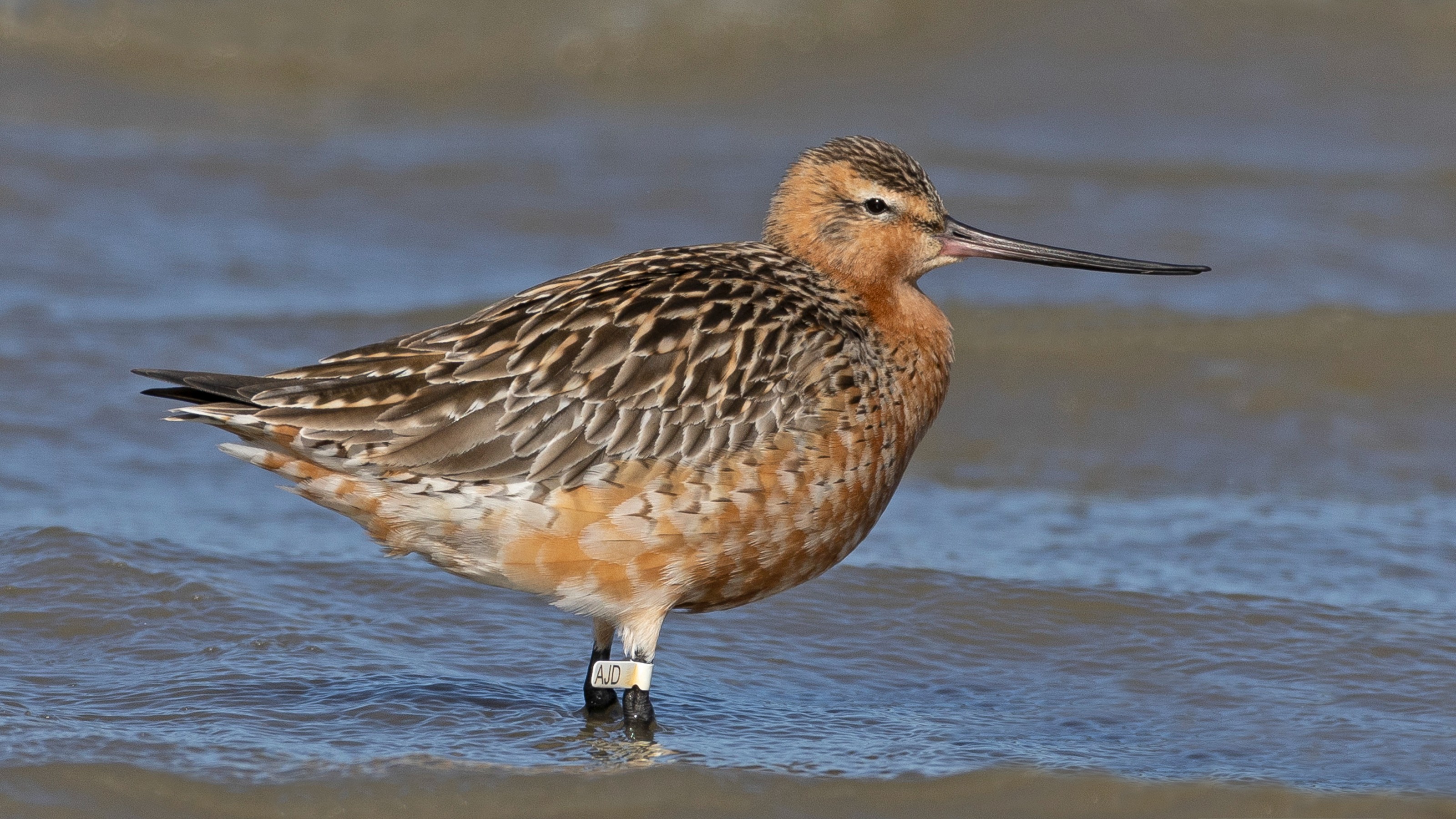
He’s a handsome international jet-setter who is a stickler for punctuality, and he has become the poster bird for a project where Indigenous knowledge traditions are engaging storytelling, art, and science to activate ancient connections between indigenous communities at opposite ends of the world, and carving out unique Indigenous leadership in global biodiversity conservation efforts.
Every October, AJD completes a staggering navigational feat. He and thousands of other kūaka fly non-stop from Alaska to the Southern Hemisphere—at 11,000km it’s the longest flight of any seabird. Some kūaka migrate to eastern areas of Australia, and about 75,000 descend on various parts of Aotearoa’s coastline. When the kūaka make landfall, the males tip the scales at just 250 grams—about the same weight as a medium apple—and females at around 300 grams.
AJD was given a leg tag in 2008, meaning Whanganui’s local birding community have been able to accurately track his migration schedule. AJD is a creature of habit—he always makes his first Aotearoa stop at Foxton Beach, and in December, he and a small group then move to the rich feeding grounds of the estuary of the Whanganui River. They spend the next few months feasting on molluscs and worms in the mudflats, which helps them grow to roughly double the size they were on arrival. They need to fatten up in preparation for their departure on the same day of March each year—you could set your watch to it—when they take flight again on the long journey back to their Alaskan nesting sites in the Yukon-Kuskokwin Delta.
The Kūaka Collective
A desire to increase awareness of the tiny bird among Whanganui’s local community led to the formation of the Whanganui Kūaka Collective, a kaupapa-led project that combines art, storytelling, and science in an effort to understand more about the special manu and how to protect it.
Artist Cecelia Kumeroa (Te Ātihaunui-a-Pāpārangi), writer Tania Te Huna (Te Ātihaunui a Pāpārangi) and scientist Dr Billy van Uitregt (Ngā Rauru, Te Ātihaunui-a-Pāpārangi, Tūhoe)—who are all Whanganui uri (descendants)—are driving the conservation kaupapa at the Whanganui end of the kūaka’s journey.
“We’re looking at how the kūaka features in Whanganui’s stories, and creating new narratives that we hope will bring the community on board with the mahi of protecting this precious manu,” explains Cecelia.
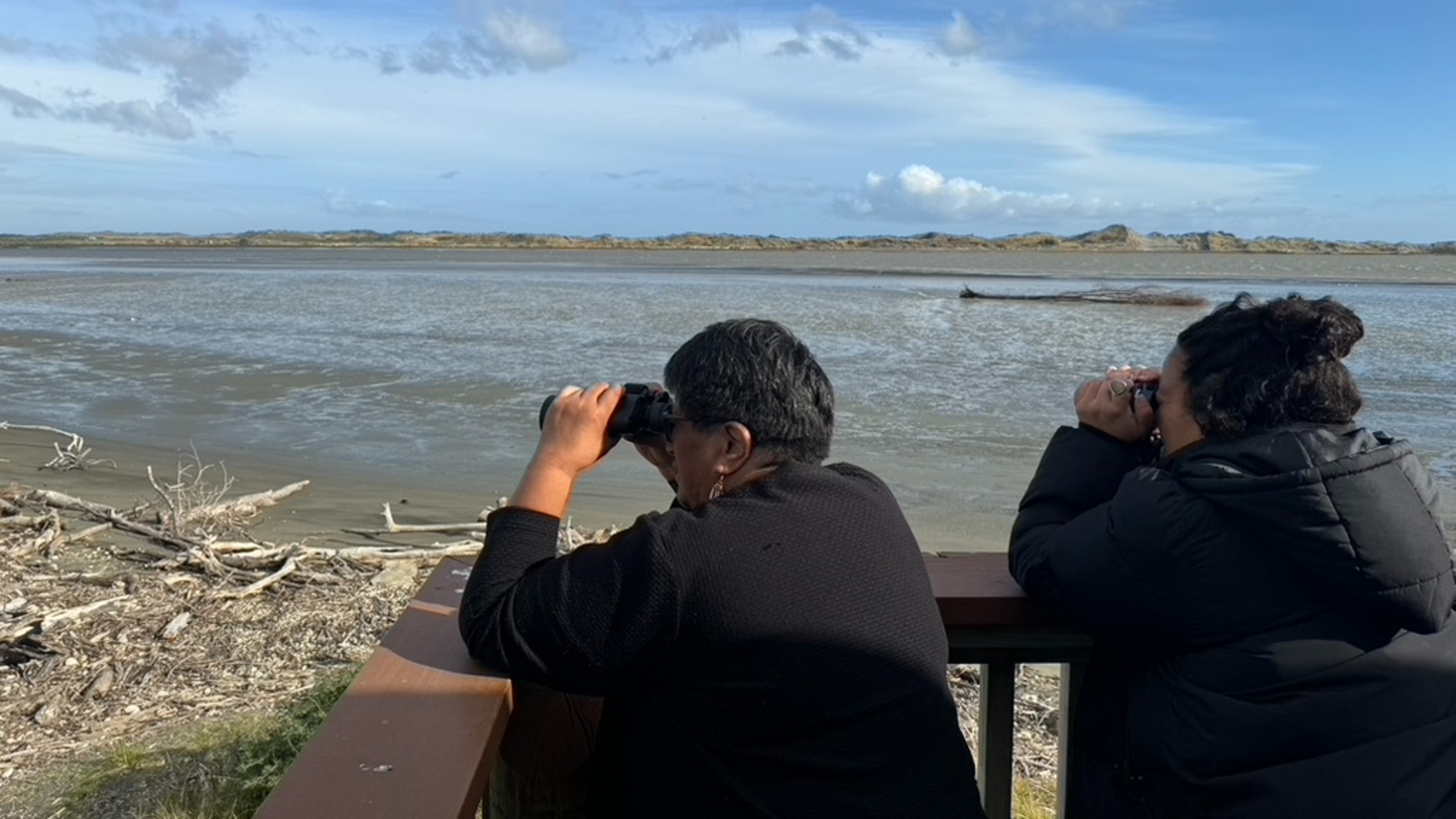
While a few die-hards gaze across the estuary throughout AJD's annual stay on the Whanganui river estuary, the community now gather each 25th of March to wish him well on his journey to Asia then on to Alaska.
The Collective is teaming up with indigenous collaborators from other locations on the kūaka’s “flyway”, which includes Aotearoa, Alaska, and Australia, as well as Korea, Taiwan, and China, where it stops over to refuel in the Yellow Sea on its northward migration.
Billy, who’s a senior lecturer at the School of Geography, Environmental and Earth Science at Te Herenga Waka, says parts of the flyway are under serious ecological threat, which is in turn putting the kūaka at risk.
“Changes to its habitats in the Yellow Sea, caused by things like pollution and land reclamation, are having a detrimental effect on kūaka numbers,” he says.
By its very nature, the kūaka pushes us to think globally. It’s not just about what happens here in Aotearoa—this manu shows how ecosystems around the world are linked, and that we’re all just part of nature.
Dr Billy van Uitregt
Senior Lecturer
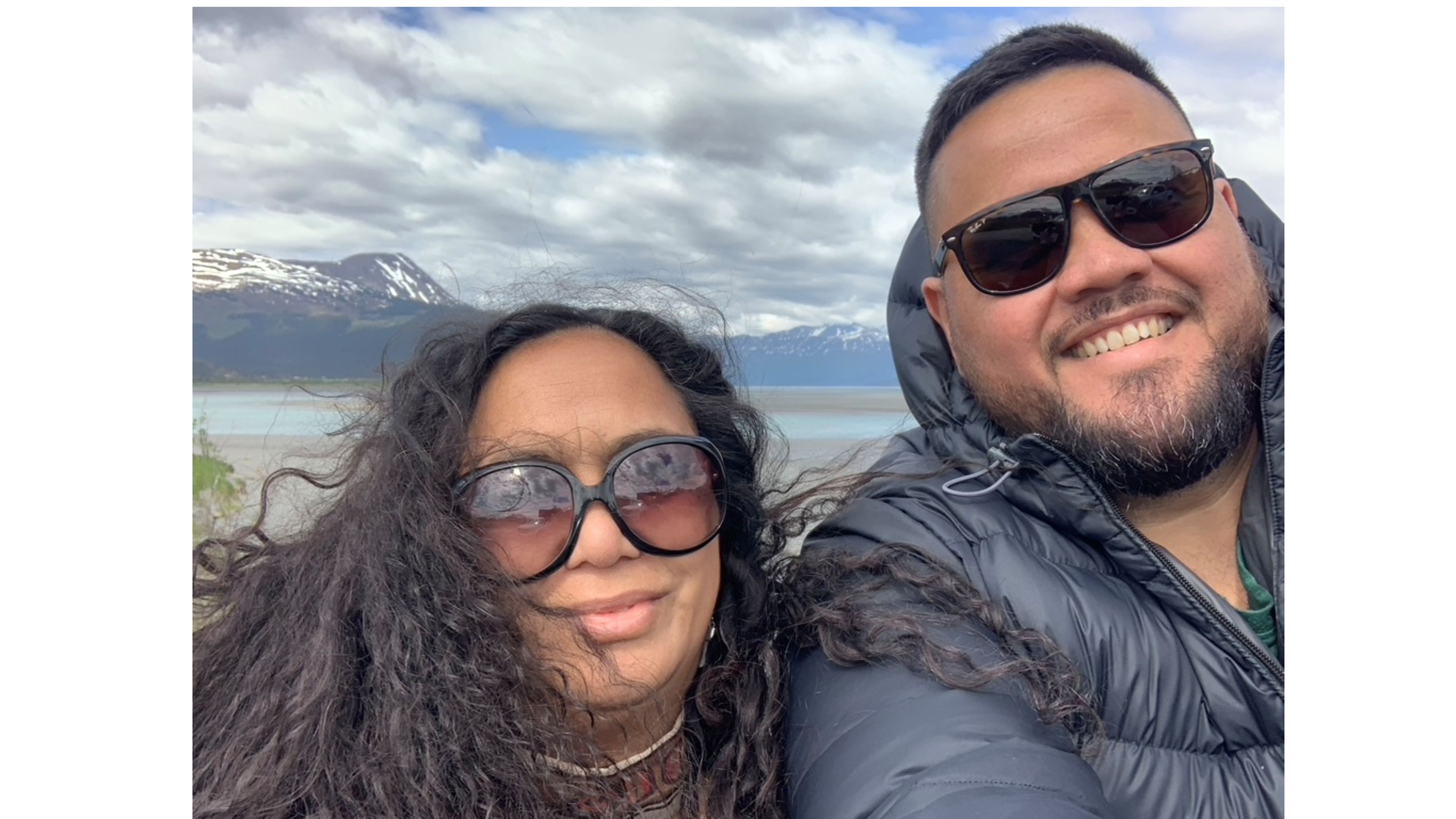
Billy and Cecelia travelled to Alaska in 2023 where they connected with First Nations people to seek collaboration on kūaka conservation research.
“We knew about AJD, so we thought it’d be a good plan to go to Alaska and put the tono to First Nations communities there to say, ‘hey do you guys want to collaborate on research towards the protection of habitats in our rohe and yours for these manu?’,” says Billy. “So we took Paul Gibson’s book and gave it to a few people there as koha. We also gave a couple of talks—one was a community-focused one at the Campbell Creek Science Centre in Anchorage, which had a great turnout of First Nations people—and Cecelia also ran a creative workshop using data collected from bird calls (Bald Eagle) and designs from Yup’k culture, resulting in a dynamic moving image artwork.”
A month after their trip they were contacted by Estelle Thomson, who is the current president of the Paimiut Yup’ik traditional council, and whose territory covers the Yukon Delta.
“The delta is where all of the kūaka who come to Aotearoa depart Alaska before they head down to us,” explains Billy. “Estelle was keen to work with us, so we met online a short time later, then she and a contingent from Paimiut Yup’ik rolled up to see us in Whanganui.”
The Whanganui Kūaka Collective continued to build connections with Indigenous peoples across the Arctic at the Climate and Cryosphere Conference in Wellington in February 2026.
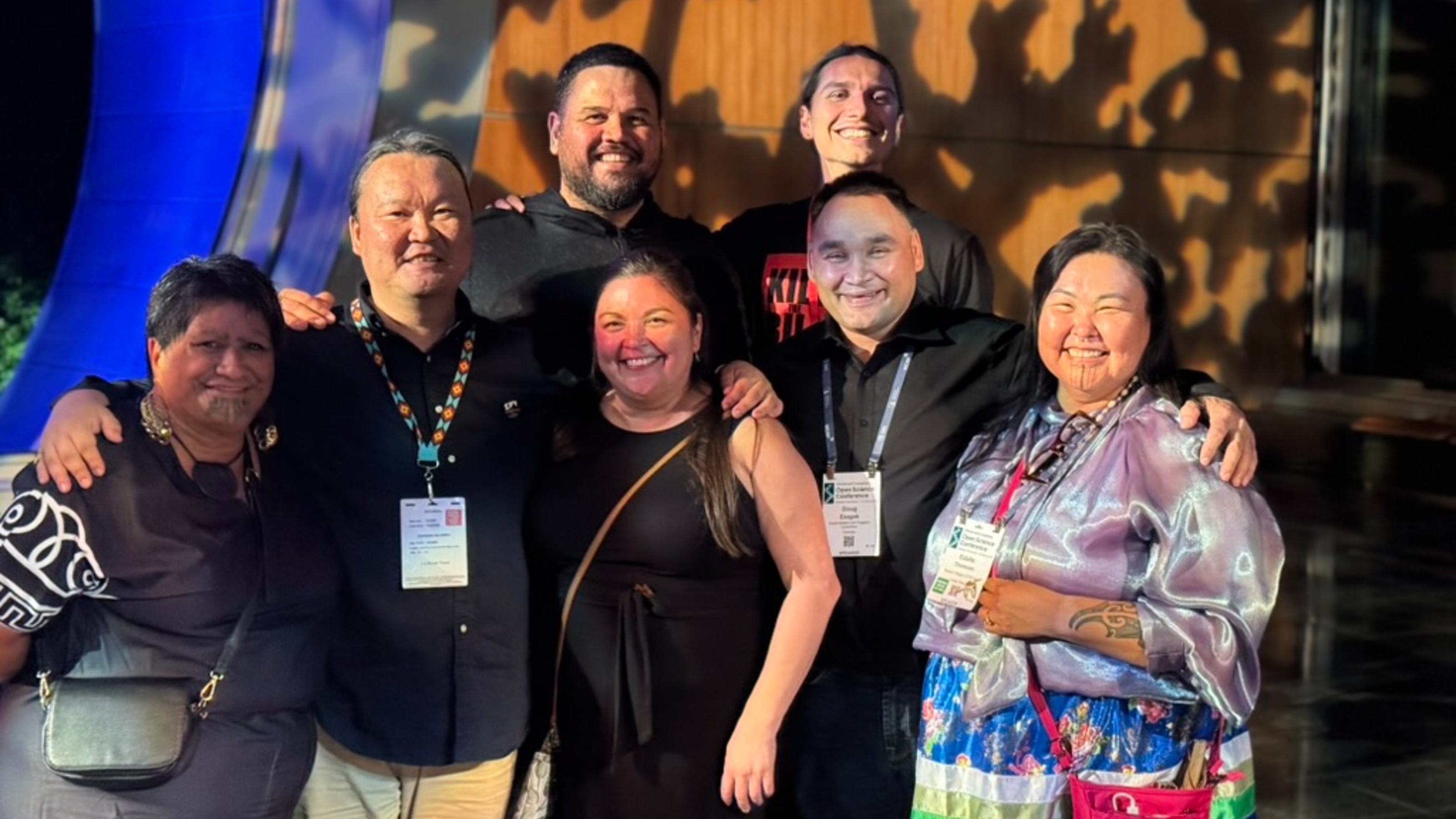
In March 2024 a ten-day wānanga was held which saw the Yup’ik delegation and representatives from Australian First Nations groups come to Aotearoa to hear about the work being done by the Whanganui Kūaka Collective. The wānanga was deliberately timed to coincide with the departure of AJD and his friends from the Whanganui estuary, which happens on or around 25 March each year.
“Estelle was a star speaker at the event—it was really insightful having someone from the Arctic talking about the implications of climate change in their territory, because the threats are much more imminent there than they are over here,” says Billy. “The kaupapa of that wānanga was whakawhanaungatanga—building relationships—and we did a bloody good job of that because we’re very much entwined now.”
The Kūaka Collective has also been supported by the US Geological Survey (USGS). Dr Dan Ruthrauff, who until recently was the USGS’s lead migratory bird specialist, has been very impressed with the Collective’s work.
“Dan has lamented to me that scientists have known for a long time about the impact environmental decline is having on these birds, but they’d really struggled to get anyone to act on it. But he has been amazed to see the work that Tania and Cecelia have done in growing this kaupapa so that it not only raises awareness but inspires action,” says Billy.
“Dan could see that science is embedded in this kaupapa—it wouldn’t be able to happen without that scientific knowledge—but the crucial step is then turning that knowledge into something that people are actually really passionate about. It’s got to hit their heads and their hearts.”
Raising awareness of the conservation kaupapa
As part of Whanganui District Council’s Streets for People public art programme, the Whanganui Kūaka Collective has devised artwork that is displayed in six bus shelters around the city’s transport hub.
“Using photos by Paul Gibson, the imagery tells the story of the kūaka and their amazing migration to Whanganui from the other side of the world. The designs are a collaborative work, taking scientific data and indigenous designs from Whanganui and Yup’k cultures,” Cecelia says.
“The idea is that public transport is a way of people being a bit more conscientious about how they move around, with obvious links to AJD and the kūaka. The flyways of the kūaka to different parts of the world each year highlights their incredible physiology. These bus shelters are a way of immersing people in that story and hopefully raising awareness about these manu and inspiring action.”
Tania Te Huna, the story-teller of the Whanganui Kūaka Collective.
Tania says telling the story of the kūaka is another effective way of engaging the community in the kaupapa of conservation. For the bus shelter project, she researched traditional whakataukī (proverbs) from around the motu and paired them with scientific information about the precious manu. Tania has also composed waiata and is set to publish a children’s book focused on AJD and his mates.
“By telling stories like these, we want people to understand that these manu are a very important tohu. They show us what is happening with the climate, and sadly, their population is declining, so in that way they’re telling stories of what is happening to our environment,” says Tania.
Tania's children's book will be distributed to schools along the length of the Whanganui river – a local story, about a local bird, written by a local storyteller.
Kūaka have been part of the local traditions forever, going all the way back to Kupe, who followed their navigation path. Those stories were almost forgotten over the years but I think the work we’re doing is having an impact—more and more people are coming to the estuary each March to send the kūaka off on their migration to Alaska.
Tania Te Huna
Writer
In his research role at Te Herenga Waka, Billy is interested in how indigenous voices, knowledge, and world-views are represented in contemporary environmental and conservation management and policy. He is also involved in an emerging collective of hapū and iwi representatives from ecosanctuaries across Aotearoa, as Ngā Rauru representative on the board of ecosanctuary Bushy Park Tarapuruhi.
Billy was born and raised in Australia, and says his starting point in the kūaka kaupapa happened while working with First Nations people as a water policy officer in South Australia, where a kūaka population was located. It wasn’t until a few years after Billy returned to his ancestral homeland of Whanganui five years ago that he and Cecelia discovered the kūaka’s important presence there, too. This was when the Whanganui Kūaka Collective took flight.
Cecelia Kumeroa (left) and Dr Billy van Uitregt (right) in Alaska.
He says there’s power in joining forces. “We’re trying to weave together science and indigenous knowledge. It’s not about treating science as a one-stop shop—it sits within a much broader knowledge tradition,” explains Billy. “This way of working is a great model that flips the script on traditional research methods, because universities actually exist to service a community. Working together like this is an effective way to learn and to educate—we’d be pretty useless at trying to do this if we weren’t working together.”
Find out more about research at Te Kura Tātai Aro Whenua—School of Geography, Environment and Earth Sciences.